Your capital sitting idle has a hidden cost
You have worked for years to build wealth, and now part of it is sitting idle or entrusted to someone who does not share your interest. Large institutional funds think in a different way. Here is the logic they use to put capital to work with method, explained simply but never simplistically.
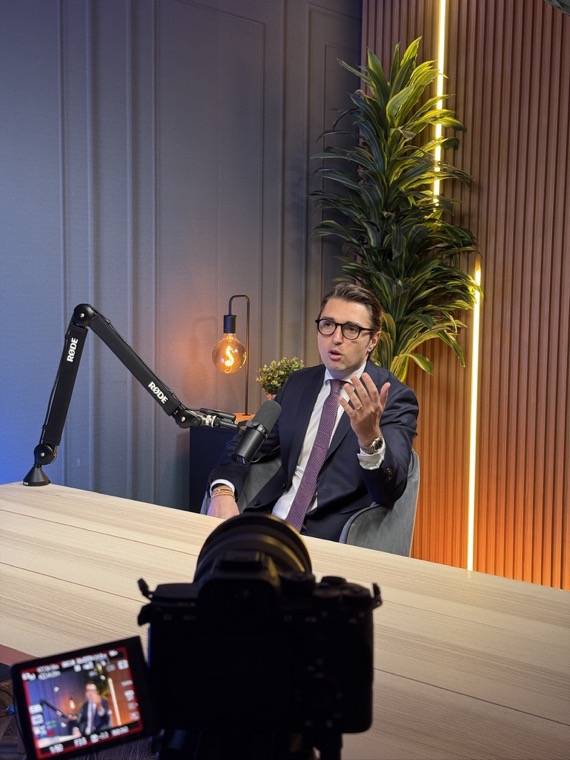
From the live session with Stefano Lokar Pignatari · Updated July 2026
The full recording of the live session · below you will find the guide drawn from it, point by point.
Why leaving your savings idle costs you
How many times in the last twelve months have you opened your statement and wondered whether you are really doing the right thing with your money?
You built up wealth over years of work, then you delegated it to someone else. That is normal, it has been done this way for generations, but almost never does the person who administers it share your interest.
Nobody has more interest than you in protecting and safeguarding your savings. Yet when you delegate, those interests do not run on the same track.
Capital left idle, or entrusted without really understanding it, has a silent cost. This guide shows you the logic large funds use to put it to work with method.
The system you pay for without noticing
You go to the bank, you say you want to invest, and the answer you get is that you pay nothing. But if you do not pay for the product, you are the product.
It is a line from Tristan Harris, a former Google designer. It holds for free social media, and it holds for your investments too.
When the bank offers you a fund it applies a fee on your assets, often between two and three per cent. Of that fee, roughly 70% does not go to whoever manages it, but to the network that sold it to you (source Consob).
The consequence: Italian funds are among the most expensive in Europe. The average cost, the TER, is 2.02% on equity funds and 1.19% on bond funds (source ESMA, 2022).
It is not a conspiracy, nor bad faith on the part of the individual adviser. It is the way a non-independent distribution network works.
The alternatives to the bank and their limits
When you realise that the bank is not enough, four paths remain. Each one has a precise limit, worth knowing beforehand.
- Day trading. High potential, but it is a full-time job and the challenge is psychological, not technical.
- ETFs and regular savings plans. Low costs and solid maths, but you are passive: when the market crashes you can only wait.
- Independent adviser. Paid by you, without conflict, but does not do active management month after month.
- Tips and copy trading. Free, so you are the product: 70-80% of those who trade this way lose money.
The ETF remains excellent over horizons of twenty or twenty-five years, where the real advantage is time. But if you are fifty, you no longer have that advantage.
None of these paths gives you active control over the present without asking you to guess the direction of the market.
How institutional funds really think
In institutional funds there is no betting on where the market will go. What is collected comes from the passing of time, exactly as insurance companies do.
Think of your car policy: you pay the premium, and if you have no accidents that premium stays with the insurer. Here the logic flips. You put yourself on the house’s side.
You do not predict the market. You sell insurance on the market and you collect the premium. You sell time and volatility, not a direction.
How many activities give you the chance to be the house, instead of the player?
The advantage is statistical. You collect when the market rises a lot, when it rises a little, when it stays flat and when it falls a little: four scenarios out of five in your favour.
The directional trader, by contrast, has to be right every time and is exposed in a single scenario. This is the other side of the table.
The middle ground between trading and investing
Sistema Plutonis sits in between between trading and long-term investing. It takes the approach of the investor and the speed of the short term.
It is a single trade a month, which is set up in a few minutes. There is no need to sit glued to the charts, no need to look for the perfect moment.
Behind it there is proprietary software built on the formulas of two Nobel laureates, Black, Scholes and Merton. It shows you the probability before you even trade.
You decide how high you want it to be: an 80% probability leaves more room for the outcome, a 99% one compresses it, but the trade becomes more prudent.
It is not a system for guessing the future. It is a protocol with an objective decided in advance, like the premium an insurer already knows it can collect.
The only real risk and how it is managed
There is only one weak point, and I want to be honest: the black swan. The sudden, violent crash described by Taleb, such as Covid, 2008 or the more recent tariffs.
It is that 5% scenario in which you cannot stay passive. The accident has happened, and it has to be handled with a protocol of capital protection.
That is why we built Sferae, a set of indicators that expose the smoke that usually precedes crashes.
A thermometer measures the fever of the market from zero to a hundred. When it goes past the threshold, the protocol says one thing only: stop and do not trade for 30-45 days.
Historically it flagged Covid more than twenty days ahead and the tariffs with the same timing. It is not a crystal ball: it is risk managed in advance.
Remember that investing always carries risks, including the possible loss of capital. One of our students, Laura, closed 47 trades in four years: only two at a loss, exactly the statistic we state.
How you can apply this logic too
Applying this logic means learning to fish, not delegating to a guru you do not know. Nobody is more responsible for your money than you.
The path rests on three integrated areas: the education on the method and on options, the tools such as the software and the Sferae indicators, the ongoing support with coaches and community.
Each month you follow three steps: you enter the data into the software and read the probability, you keep an eye on the indicators, then you wait for the trade to close naturally.
The key is sustainability. It is not a cash machine: part of the capital stays as a long-term core, a satellite part is put to work with method.
We do not work with everyone, because the System only works for the right profile. If yours is, the first step is to submit your application for a strategic session.
Continue the path.
How to deal with market crises
Do not just endure the crashes: staying clear-headed when markets fall.
Read the guide → Video guideThe institutional method in a crisis
How institutional investors operate when markets crash.
Read the guide → The methodHow the Plutonis System works
The non-directional method, from start to finish.
Read the guide →Not just theory. Real people.
A method of his own, beyond the business
How he learned to manage his savings on his own, without it becoming a second job.
Protecting what he has built
From a long career as an executive to an extra income built with method.
Clear rules, at last
From many courses without a method to a repeatable protocol, applied on his own.
Stop keeping your capital idle
Understanding is the first step. The second is finding out whether the method suits your profile. It takes a few minutes: we read your situation and, if you are not suited, we tell you honestly. No pressure, no commitment.
Do you want the full picture of the method? Read How the Plutonis System works. Educational content, not financial advice.